By Lane Tredway, Ph.D., technical services manager, Syngenta
Warm-season turfgrasses provide excellent playing conditions across much of the southern United States, but they are also vulnerable to a wide range of insect pests. Effective insect management requires more than reactive treatments. It starts with understanding pest biology, monitoring activity and selecting insecticides that provide reliable control while fitting into long-term resistance management programs.
Mole Crickets | Billbugs | Bermudagrass Mites | Fire Ants | Atexzo insecticide/miticide
Start with monitoring and timing Monitoring is the foundation of any successful insect management program. Insecticides tend to perform best against certain life stages, so identifying when pests are active is critical. You can improve application timing with tools like: - Soap flushes to detect caterpillars and mole crickets
- Linear pitfall traps to monitor adult billbug activity
- Soil sampling to confirm white grubs or billbug larvae
- Visual scouting for thinning turf, tunneling or irregular damage
Understanding seasonal patterns and local pest pressure allows treatments to be applied proactively, before significant turf injury occurs. With this foundation in place, it’s helpful to become familiar with the range of insect pests that may be present. - Mole Crickets: Damage turf through feeding and tunneling, often leading to thinning turf and uneven playing surfaces.
- Damage typically increases as nymphs grow larger, making early-season monitoring especially important.
- Insecticides are most effective when small to medium-sized nymphs are present.
- Billbugs: Damage can be caused by adults or larvae.
- Small larvae feed on crowns and leaf sheaths.
- Large larvae feed on roots, rhizomes and stolons.
- Adults feed on leaves and leaf sheaths.
- Bermudagrass Mites: Active year-round in south Florida and late spring to summer in the transition zone.
- The entire life cycle occurs between leaf sheaths within the whorl of the grass plant.
- Mites inject toxins while feeding, which causes abnormal growth and turf decline.
- Fire Ants: Outbreaks can be caused by rain and warming soil temperatures.
- Advion® fire ant bait provides rapid, effective and long-term fire ant control with minimal labor input. The active ingredient, indoxacarb, must be consumed and bioactivated by the ants’ internal enzymes to provide control, so it does not trigger an alarm response that can result in colony relocation.
- Download the Advion Fire Ant Bait Guarantee Program for more information about application timing.
Atexzo simplifies warm-season insect management Atexzo® insecticide/miticide provides superintendents with a versatile tool for managing key warm-season turf pests, including mole crickets, billbugs, caterpillars and bermudagrass mites. It’s powered by PLINAZOLIN® technology, a unique active ingredient in a novel class of chemistry, IRAC Group 30. By controlling larvae and adults, Atexzo helps simplify insect management by offering greater application flexibility while also supporting resistance management strategies through a unique mode of action. Application recommendations for broad-spectrum insect control - Atexzo at 8 fl. oz./A is recommended to control mole crickets and billbugs.
- In Florida, an application of Atexzo in September or October is recommended to control these insects leading into the golf season, followed by a second application in March or April.
- In the transition zone, a single application of Atexzo in May or June is recommended.
- Each application of Atexzo will also protect against caterpillars like sod webworm and fall armyworm for up to 2 months.
- For bermudagrass mite control, Atexzo performs best when applied at 4 fl. oz./A on a 14-day interval.
- It is recommended to include a non-ionic surfactant at 0.32 fl. oz./gal. of spray solution.
- Applications should be made when bermudagrass mites are active or symptoms are evident, generally in late winter to spring in Florida or in late spring to summer in the transition zone.
All applications of Atexzo can be allowed to dry on the foliage and then watered-in with at least 0.1 in. of irrigation within 24 hours. | Atexzo Control of Hunting Billbugs | 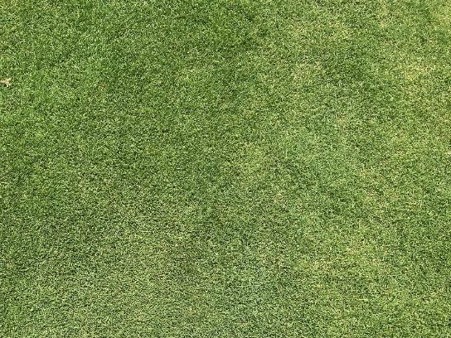 | 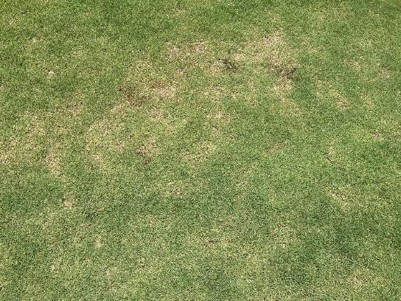 | | Atexzo® insecticide/miticide 8 fl. oz./A | Untreated | | Source: Old Marsh Golf Club, Palm Beach Gardens, Florida, 2025. ‘Latitude 36’ bermudagrass. Atexzo applied at 8 fl. oz./A on March 21, 2025. Sprayed in 40 GPA and allowed to dry, followed by 1/8” of irrigation that night. Photos taken May 21, 2025. |
For more information about controlling southern insects, watch the GCSAA webinar, Controlling Southern Insects – Mole Crickets, Mites and Billbugs, and earn 0.1 GCSAA Education Points.
Syngenta hereby disclaims any liability for Third-Party websites referenced herein.
All photos are either the property of Syngenta or are used with permission.
© 2026 Syngenta. Important: Always read and follow label instructions. Some products may not be registered for sale or use in all states or counties and/or may have state-specific use requirements. Please check with your local extension service to ensure registration and proper use. Advion®, Atexzo®, PLINAZOLIN®and the Syngenta logo are trademarks of a Syngenta Group Company. |